Public AI literacy commons
Shared language for civic life with large language models.
LLMspedia Civic Commons is an English public-interest reference for people who have to explain, teach, evaluate, and govern large language models in the open. It is designed for community colleges, public libraries, nonprofit programs, research consortiums, civic technology groups, and institutional learning teams that need accurate language without vendor gloss or insider shorthand.

A commons, not a hype desk.
The site frames AI literacy as a shared public capacity. Instead of presenting models as magic tools or inevitable infrastructure, it helps readers ask better questions: What evidence supports this answer? Which claims need sources? How should institutions document model use? Where do accessibility, consent, and accountability belong in everyday workflows?
Plain-language foundations
Concept pages translate model behavior, prompting, retrieval, evaluation, and policy vocabulary into language that works in classrooms, libraries, local government briefings, and community workshops.
Shared evaluation practice
Rubrics favor observable evidence: source handling, uncertainty, harmful omissions, accessibility, citation quality, and the points where a human reviewer must stay in the loop.
Institution-ready curriculum
Modules are written for reuse by educators, librarians, newsroom trainers, public agencies, nonprofit technologists, and research groups that need careful public explanation.
Community review language
The commons treats AI literacy as a civic skill. It gives facilitators a way to discuss model limits, benefits, tradeoffs, and governance choices without hype or panic.
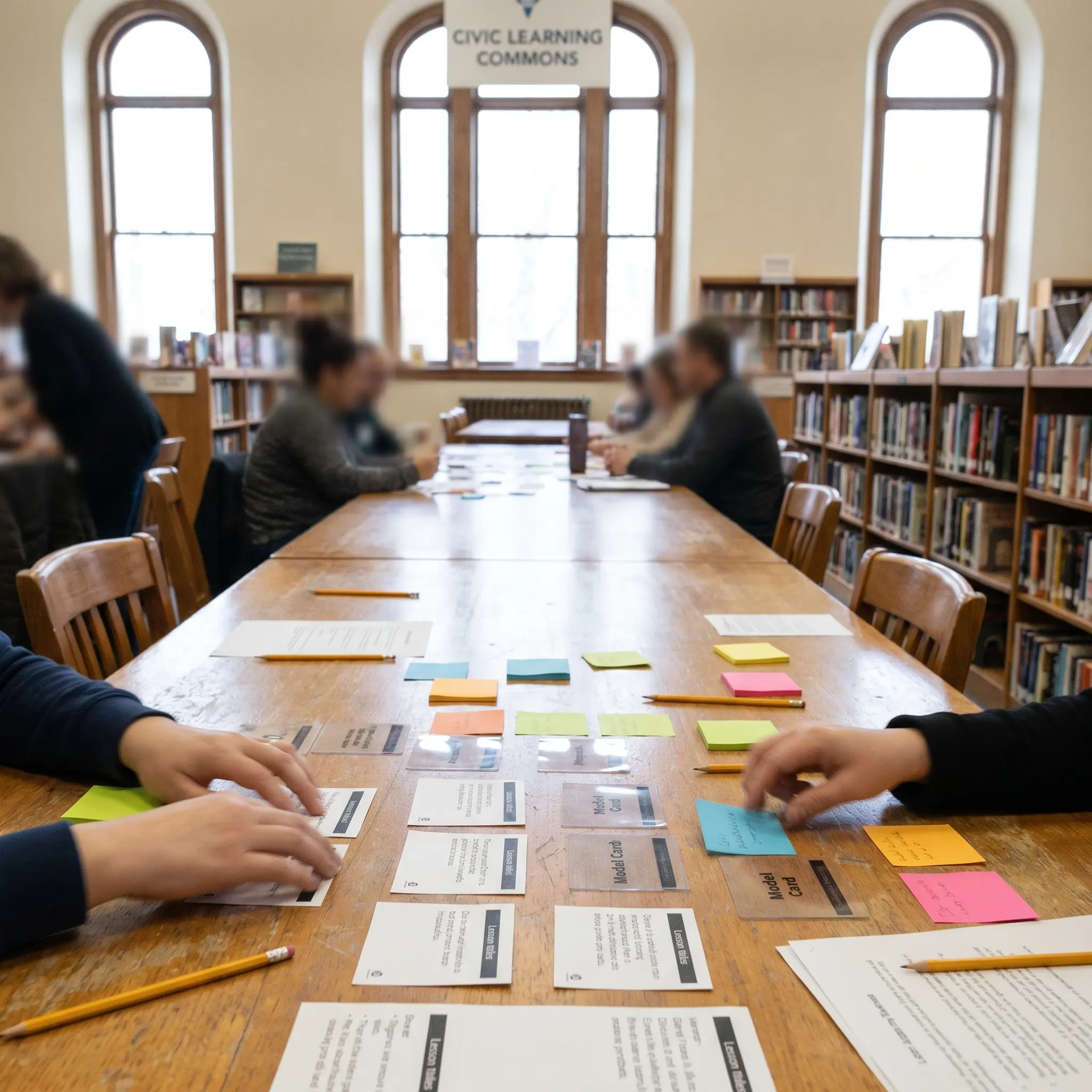
Open curriculum
Lessons that can leave the screen and enter a room.
LLMspedia.org organizes its public pages around teachable moments: how a model predicts language, what a prompt can and cannot specify, why retrieval changes an answer, how hallucination differs from uncertainty, and how a reviewer can compare outputs without pretending the test is neutral. The writing is intentionally facilitator-friendly, with definitions, discussion prompts, and observable checks that a mixed-experience group can use together.
The goal is not to crown a single best model. The goal is to improve public reasoning around model use so that citizens, students, staff, and decision makers can notice weak claims, demand better records, and explain tradeoffs with care.
Commons map
Three public artifacts
Concept entries
Durable explanations of LLM terms and behaviors written for institutional readers, not vendor launch cycles.
Evaluation worksheets
Review patterns for answer quality, source use, bias checks, disclosure, escalation, and public communication.